

Truck parking has become one of the most pressing issues within the transportation and logistics industry as freight demand continues to rise while available parking infrastructure struggles to keep pace. Commercial truck drivers rely on safe, accessible, and well-managed parking facilities to comply with hours-of-service regulations, rest adequately, and protect valuable cargo and equipment. However, limited parking availability, increasing congestion, and inconsistent facility standards have turned truck parking into a daily challenge for drivers, fleet operators, and logistics planners alike. Addressing truck parking needs is essential not only for driver well-being but also for roadway safety, supply chain efficiency, and economic stability.
As trucking remains the backbone of goods movement, the importance of reliable truck parking extends far beyond convenience. Poor parking access forces drivers to park in unsafe or unauthorized locations, increasing the risk of accidents, cargo theft, and regulatory violations. Proper truck parking solutions support compliance, reduce stress for drivers, and improve operational efficiency for carriers. Understanding the role of truck parking, the challenges surrounding it, and the available solutions helps stakeholders make informed decisions that support both safety and productivity.
Understanding the Importance of Truck Parking
Truck parking plays a critical role in ensuring the safe and efficient operation of commercial transportation networks. Drivers are required to follow strict hours-of-service regulations that limit driving time and mandate rest periods, making access to parking facilities a necessity rather than a convenience. Without adequate truck parking, drivers may be forced to continue driving while fatigued or park in unsafe locations such as highway shoulders, ramps, or residential areas, increasing the risk of accidents and enforcement penalties.
In addition to regulatory compliance, truck parking supports driver health and performance. Adequate rest improves alertness, reaction time, and decision-making, which are essential for operating large commercial vehicles safely. Secure truck parking facilities also help protect vehicles, cargo, and fuel from theft and vandalism. For fleet operators, reliable parking access reduces delays, improves route planning, and minimizes operational disruptions, contributing to more predictable and efficient logistics operations.
Challenges Facing Truck Parking Availability
One of the most significant challenges in truck parking is the growing imbalance between freight demand and parking capacity. As freight volumes increase, the number of trucks on the road continues to rise, while investment in parking infrastructure has not kept pace. Many public rest areas and private truck stops operate at or near full capacity during peak hours, leaving drivers with limited options for legal and safe parking.
Urbanization and land-use restrictions further complicate the development of new truck parking facilities. In many regions, zoning regulations and community opposition make it difficult to build large-scale parking areas for commercial vehicles. Rising land costs also discourage private investment, particularly in high-demand corridors. Additionally, inconsistent facility standards mean that not all truck parking locations offer adequate lighting, security, or amenities, reducing their usability and appeal to drivers. These challenges collectively contribute to a fragmented and often insufficient truck parking landscape.
Types of Truck Parking Facilities
Truck parking facilities come in several forms, each serving different needs within the transportation network. Public rest areas are typically operated by government agencies and provide basic parking access for short-term rest. While these facilities are free and strategically located along highways, they often have limited capacity and few amenities, making them insufficient for long-haul drivers seeking extended rest periods.
Private truck stops and travel centers offer a more comprehensive range of services, including fueling, food, showers, maintenance, and secure parking. These facilities are essential hubs for drivers but can become overcrowded, especially during nighttime hours. Dedicated commercial truck parking lots provide another option, focusing primarily on secure, long-term or overnight parking without the additional services of full-service truck stops. These facilities are increasingly popular in industrial areas and near major freight corridors, offering controlled access, surveillance, and reserved spaces. Each type of truck parking serves a distinct role, and a balanced mix is necessary to meet industry demand.
Safety and Security in Truck Parking
Safety and security are among the top priorities when evaluating truck parking facilities. Drivers often transport high-value cargo, making parked trucks attractive targets for theft and vandalism. Poorly lit or unsecured parking areas increase the risk of crime and compromise driver safety. Secure truck parking facilities address these concerns through controlled access, perimeter fencing, surveillance cameras, and on-site personnel.
In addition to protecting cargo, secure parking enhances driver confidence and peace of mind, allowing for proper rest without fear of disturbance. Well-designed parking layouts also reduce the risk of accidents by providing sufficient space for maneuvering large vehicles and minimizing conflicts between trucks and passenger vehicles. Investing in safety-focused truck parking infrastructure benefits not only drivers but also carriers, insurers, and the broader transportation system by reducing losses and improving reliability.
The Role of Technology in Modern Truck Parking
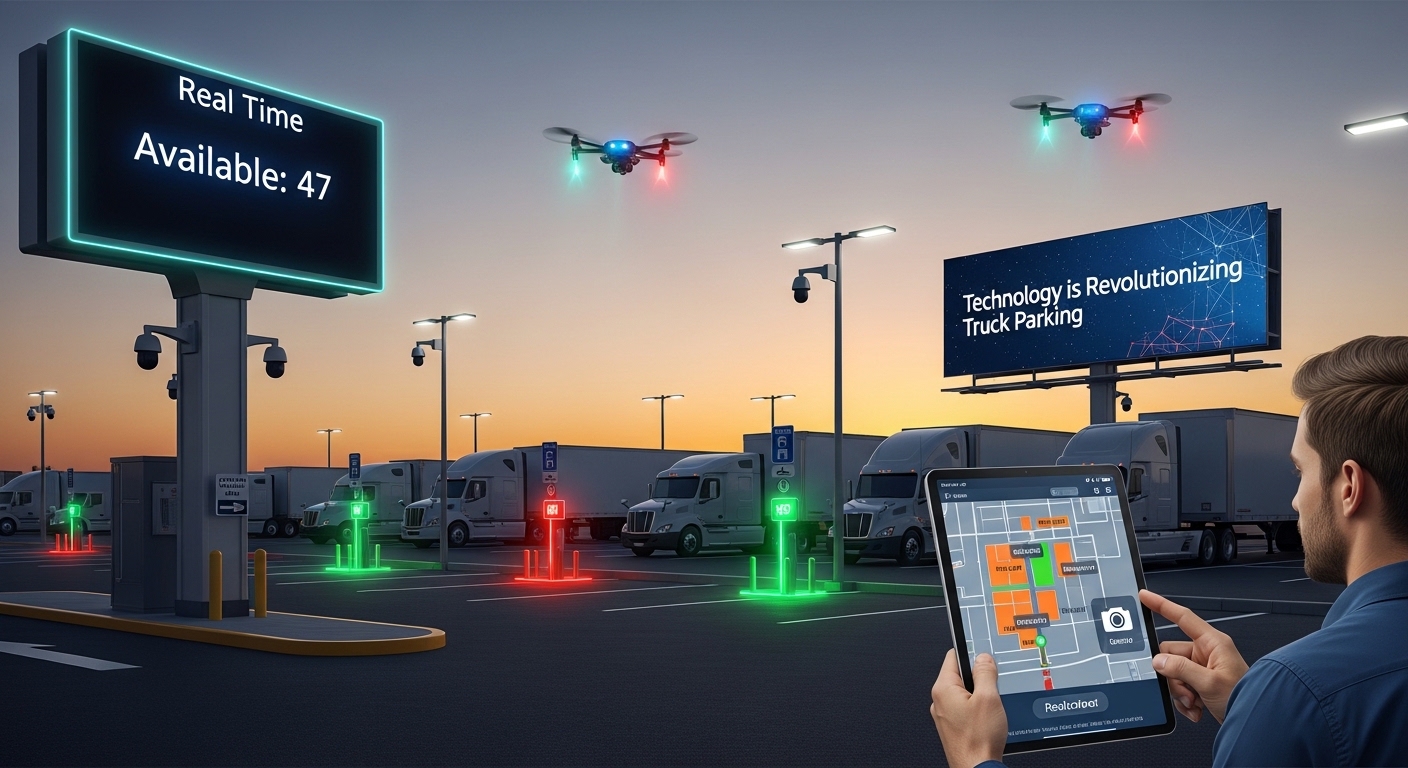
Technology is playing an increasingly important role in improving truck parking efficiency and accessibility. Real-time parking availability systems allow drivers to locate open spaces before arriving at a facility, reducing unnecessary driving and fuel consumption. Mobile applications and digital platforms provide information on parking locations, amenities, pricing, and security features, helping drivers make informed decisions based on their needs and schedules.
Reservation systems are also gaining traction, enabling drivers and fleet managers to secure parking spaces in advance. This approach reduces uncertainty and ensures compliance with rest requirements, particularly in high-demand areas. Advanced access control and monitoring technologies further enhance security and operational efficiency by tracking vehicle movements and preventing unauthorized access. As technology adoption increases, truck parking becomes more predictable, efficient, and driver-friendly.
Economic Impact of Adequate Truck Parking
Adequate truck parking has a direct and measurable impact on the economy by supporting efficient freight movement and reducing operational inefficiencies. When drivers struggle to find parking, they may lose productive driving time, incur fines, or experience delays that disrupt delivery schedules. These inefficiencies increase costs for carriers, shippers, and ultimately consumers.
Conversely, well-planned truck parking infrastructure improves supply chain reliability by enabling drivers to adhere to schedules and regulations. Reduced congestion caused by illegal or roadside parking enhances traffic flow and roadway safety, benefiting all road users. Investment in truck parking facilities also creates economic opportunities through construction, maintenance, and service-related jobs, contributing to local and regional economic development.
Environmental Considerations in Truck Parking
Truck parking also has environmental implications, particularly in relation to fuel consumption and emissions. Drivers searching for parking may spend additional time idling or driving, increasing fuel use and greenhouse gas emissions. Strategically located parking facilities help minimize these impacts by reducing unnecessary travel and encouraging efficient route planning.
Modern truck parking facilities can incorporate sustainable design features such as energy-efficient lighting, stormwater management systems, and alternative fuel infrastructure. Providing designated parking areas also reduces environmental damage caused by trucks parking on undeveloped land or sensitive areas. By integrating environmental considerations into truck parking planning, stakeholders can support sustainability goals while meeting operational needs.
Truck Parking and Regulatory Compliance
Regulatory compliance is a major driver of truck parking demand, as drivers must adhere to hours-of-service rules that mandate rest periods after specific driving intervals. Without reliable parking access, compliance becomes difficult, increasing the risk of violations and enforcement actions. Truck parking shortages place drivers in a challenging position, forcing them to choose between safety and compliance.
Adequate truck parking infrastructure supports regulatory objectives by enabling drivers to rest as required without resorting to unsafe or illegal parking practices. It also simplifies compliance monitoring for carriers and enforcement agencies by reducing instances of noncompliance caused by infrastructure limitations. Addressing truck parking shortages is therefore a shared responsibility between public agencies, private operators, and industry stakeholders.
Planning and Development of Truck Parking Facilities
Developing effective truck parking facilities requires careful planning and collaboration among multiple stakeholders. Site selection is a critical factor, as facilities must be located near major freight corridors while minimizing conflicts with residential areas. Zoning approvals, environmental assessments, and community engagement are essential steps in the development process, helping address concerns and ensure long-term viability.
Design considerations include capacity, circulation, safety features, and amenities tailored to driver needs. Flexibility is also important, as freight patterns and vehicle technologies evolve over time. Public-private partnerships can play a key role in expanding truck parking infrastructure by leveraging shared resources and aligning incentives. Strategic planning ensures that truck parking investments deliver maximum benefit to drivers, carriers, and communities.
Long-Term Benefits of Improved Truck Parking Solutions
Improved truck parking solutions offer long-term benefits that extend across the transportation ecosystem. Drivers experience reduced stress, improved health, and enhanced job satisfaction when reliable parking is available. Carriers benefit from improved compliance, reduced operational disruptions, and lower risk of cargo loss or damage.
Communities benefit from safer roads, reduced congestion, and minimized environmental impacts associated with illegal or improvised parking. The overall transportation system becomes more efficient, resilient, and capable of supporting economic growth. By prioritizing truck parking as a critical component of infrastructure planning, stakeholders can address current challenges while preparing for future demand.
Conclusion: Why Truck Parking Is a Critical Transportation Priority
Truck parking is far more than a logistical convenience; it is a fundamental component of transportation safety, efficiency, and economic performance. As freight volumes continue to grow, the need for reliable, secure, and accessible truck parking becomes increasingly urgent. Addressing parking shortages requires a comprehensive approach that combines infrastructure investment, technological innovation, regulatory support, and collaboration between public and private sectors.
By improving truck parking availability and quality, the transportation industry can support driver well-being, enhance safety, and strengthen supply chain reliability. Long-term commitment to truck parking solutions ensures that the industry remains capable of meeting evolving demands while protecting drivers, communities, and the broader economy. Investing in truck parking today lays the foundation for a safer, more efficient transportation network tomorrow.
 Wild Rise
  Brendly French