

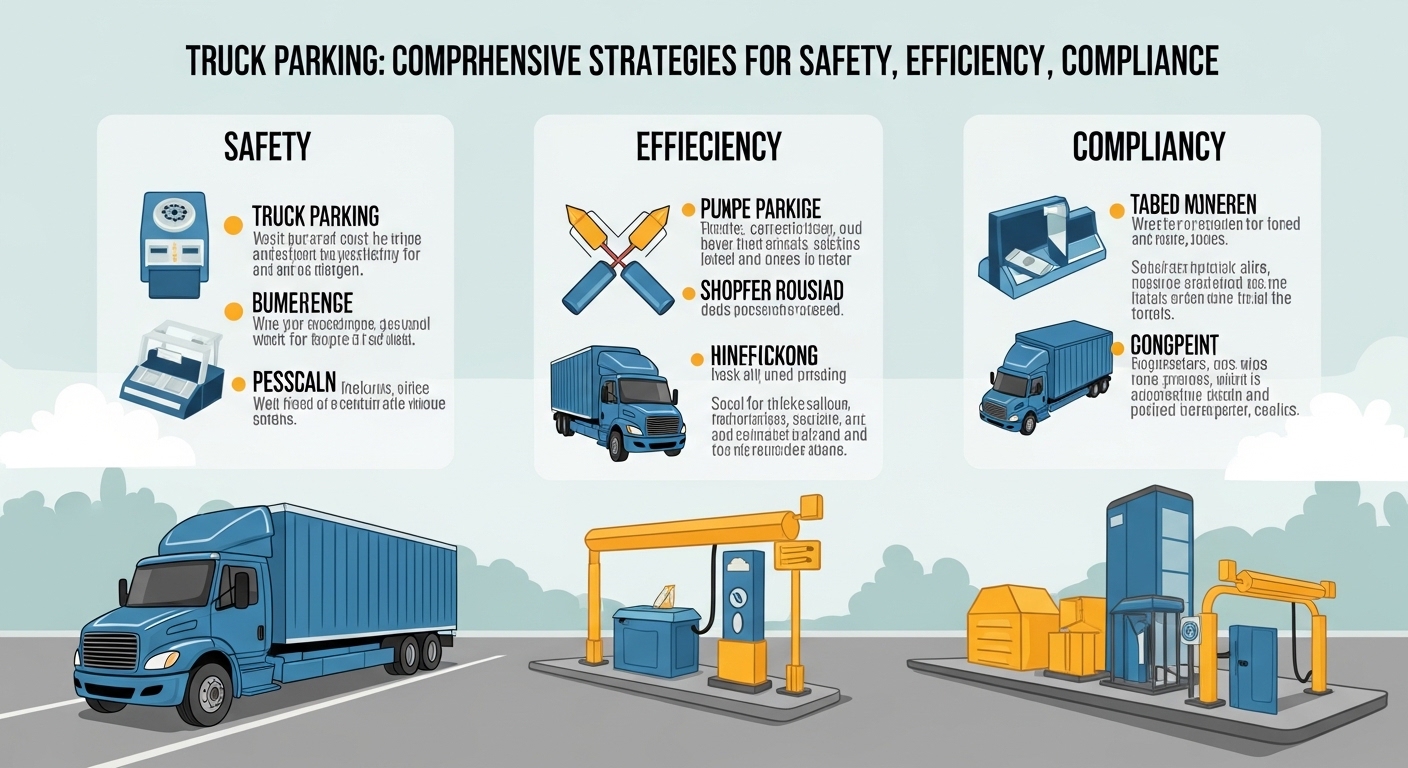
Truck parking is a critical aspect of the logistics and freight transportation industry, yet it is often overlooked despite its direct impact on driver safety, regulatory compliance, operational efficiency, and supply chain reliability. Unlike passenger vehicles, trucks require specialized parking solutions due to their size, weight, maneuvering needs, and operational schedules. Drivers, fleet operators, and logistics companies rely on safe and accessible parking to ensure timely deliveries, protect cargo, comply with federal and state regulations, and maintain overall operational productivity.
As freight demand continues to grow across the country, the availability of suitable truck parking has become an increasing concern. Congestion at rest areas, truck stops, industrial zones, and urban corridors has created a pressing need for better parking management and infrastructure. Insufficient truck parking can result in delayed deliveries, violations of hours-of-service regulations, increased driver fatigue, and unsafe parking practices that compromise public safety. Understanding the challenges, regulations, and best practices surrounding truck parking is essential for all stakeholders in the trucking industry.
The Importance of Truck Parking
Truck parking is much more than a matter of convenience for drivers. It is directly tied to safety, compliance, and operational efficiency. The Federal Motor Carrier Safety Administration (FMCSA) mandates hours-of-service regulations that limit the number of consecutive hours a driver can operate a vehicle. Failure to find legal parking can force drivers to stop in unauthorized locations, risking accidents, citations, cargo damage, and personal safety.
In addition, truck parking supports driver health and productivity. Long-haul drivers spend extended periods on the road, often in isolated or challenging environments. Access to safe, secure, and comfortable parking areas allows drivers to rest properly, reducing fatigue-related accidents and improving job performance. Fleet operators also benefit, as proper parking reduces downtime, minimizes liability, and protects valuable cargo and equipment.
From a broader perspective, effective truck parking supports the transportation ecosystem by reducing congestion caused by improperly parked vehicles, improving supply chain efficiency, and ensuring that goods reach their destinations on time. When truck parking infrastructure is insufficient, the ripple effects are felt throughout the logistics and consumer goods industries.
Types of Truck Parking
Truck parking can be categorized into public, private, and industrial options, each designed to meet specific operational and safety requirements.
Public truck parking includes highway rest areas, truck stops, and service plazas. These facilities are strategically located along major freight corridors and often provide amenities such as fuel, restrooms, showers, food services, and minor vehicle maintenance. Public truck parking is accessible to all drivers, making it suitable for short-term or overnight stays. However, during peak travel times, availability can be limited, forcing drivers to compete for spaces or search for alternative locations.
Private truck parking is typically offered by commercial property owners, logistics hubs, or trucking companies. These facilities often require reservations, monthly agreements, or membership programs. Private parking areas provide enhanced security, including gated access, surveillance cameras, on-site personnel, and lighting. These factors make private truck parking ideal for long-term vehicle storage, valuable cargo, and high-risk areas where security is a priority.
Industrial and commercial zone parking includes warehouse yards, distribution centers, manufacturing plants, and retail logistics hubs. These areas allow trucks to stage, load, and unload cargo efficiently. While industrial parking is convenient for operational purposes, it is often regulated with time limits, permits, and access controls. Drivers must adhere to facility rules to maintain safety and compliance.
Understanding the different types of truck parking allows fleet managers and drivers to choose options that meet operational, safety, and regulatory requirements effectively.
Regulatory Considerations
Truck parking is governed by a complex combination of federal, state, and local regulations. Federal rules, particularly those enforced by the FMCSA, require drivers to take mandatory rest periods, making access to legal parking crucial for compliance. Failure to find suitable parking can force drivers to stop in unauthorized locations, potentially violating federal law and risking enforcement actions.
State and local authorities impose additional restrictions on truck parking. Many municipalities prohibit trucks from parking on residential streets, downtown areas, or public roads overnight. Zoning laws may restrict the location, duration, and size of vehicles permitted in certain areas. Drivers must carefully observe posted signs and ensure they comply with all local ordinances to avoid fines, towing, or legal disputes.
Fleet operators are responsible for planning routes that include approved truck parking locations and providing drivers with updated information about legal parking areas. A lack of planning in this regard can lead to operational delays, legal issues, and safety risks, highlighting the importance of integrating parking considerations into logistics management.
Safety and Security in Truck Parking
Safety and security are critical concerns for truck parking. Trucks often carry valuable cargo, expensive equipment, and large quantities of fuel, making them attractive targets for theft, vandalism, and cargo tampering. Secure parking areas mitigate these risks by offering controlled access, fencing, lighting, surveillance cameras, and on-site staff.
Driver safety is equally important. Properly designed truck parking areas must provide sufficient space for maneuvering, clear signage, well-maintained surfaces, and traffic flow patterns that minimize accidents. Overcrowded or poorly designed parking areas increase the likelihood of collisions, injuries, and property damage.
Operational safety also includes procedures such as proper vehicle positioning, fire prevention measures, and access to emergency services. Well-managed truck parking facilities protect drivers, cargo, and assets while contributing to a safer overall transportation network.
Challenges Facing Truck Drivers
Truck drivers encounter multiple challenges in finding suitable parking. One of the most significant is limited availability. High-demand corridors, urban areas, and peak travel times often result in insufficient parking spaces, forcing drivers to search for alternative options that may be unsafe or illegal.
Time constraints related to federal hours-of-service rules compound the issue. Drivers approaching legal driving limits must locate safe and compliant parking quickly, and delays in finding parking can put them at risk of violating regulations.
Cost considerations are another challenge. While some truck parking facilities are free, others charge fees for overnight or long-term parking. Independent drivers or smaller fleets must balance safety, convenience, and compliance with operational costs, making effective planning essential.
Role of Technology in Truck Parking
Technology has emerged as a powerful tool for addressing truck parking challenges. Mobile applications and GPS-enabled platforms provide real-time information about available spaces, amenities, and pricing. These tools allow drivers to plan stops in advance, reducing uncertainty and improving compliance with hours-of-service requirements.
Fleet management systems integrate parking data into route planning, enabling dispatchers and drivers to identify approved parking locations along planned routes. Advanced systems utilize predictive analytics to estimate parking availability based on traffic patterns and historical usage, helping drivers plan more efficiently.
As technology continues to evolve, data-driven solutions have the potential to optimize truck parking utilization, improve safety, and enhance overall operational efficiency.
Best Practices for Managing Truck Parking
Effective truck parking management requires planning, coordination, and disciplined execution. Drivers should identify approved parking locations along their routes in advance, particularly when traveling through areas with limited availability. Awareness of facility amenities, safety features, and legal restrictions helps prevent last-minute challenges and ensures regulatory compliance.
Fleet operators should maintain updated lists of approved parking facilities and communicate them clearly to drivers. Investment in secure long-term parking solutions for valuable cargo or vehicles can mitigate risk and support operational continuity. Cooperation with warehouses, distribution centers, and industrial facilities ensures that loading and staging operations are efficient and compliant with local regulations.
Responsible parking practices, including avoiding restricted areas, minimizing noise, and following safety protocols, foster positive relationships with regulators, communities, and customers.
Economic and Industry Implications
Truck parking has significant implications for the efficiency and reliability of the logistics industry. Adequate parking infrastructure reduces delays, supports timely freight movement, and lowers operational costs. Conversely, insufficient parking causes congestion, increases stress for drivers, and disrupts supply chains, leading to potential financial losses.
Investing in truck parking infrastructure—whether through public rest areas, private facilities, or industrial staging zones—benefits the entire transportation ecosystem. Secure and accessible parking supports driver safety, compliance, and operational efficiency, ultimately contributing to improved economic performance for freight-dependent industries.
Future Trends in Truck Parking
The future of truck parking is closely linked to infrastructure development, technology adoption, and regulatory evolution. Expanding parking capacity along major freight corridors, integrating smart parking solutions, and leveraging data analytics are expected to become central strategies in addressing ongoing parking shortages.
Public-private partnerships may play a key role in developing safe, efficient, and accessible truck parking facilities. Municipalities and logistics companies can collaborate to create designated parking areas that meet industry needs while minimizing community disruption. As the demand for freight transportation grows, truck parking will continue to be a critical focus for industry stakeholders.
Conclusion
Truck parking is a foundational element of safe, efficient, and compliant freight transportation. Proper parking supports driver health, protects cargo, ensures adherence to federal and local regulations, and enhances overall supply chain efficiency.
By understanding available parking options, prioritizing safety and security, leveraging technology, and following best practices, drivers and fleet operators can navigate the challenges of truck parking effectively. Investments in infrastructure, planning, and innovation will continue to improve accessibility and safety, supporting the growth and sustainability of the trucking industry while ensuring the safe and efficient movement of goods.
 Wild Rise
  Brendly French