

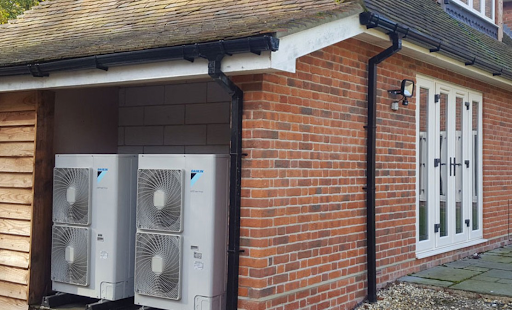
Own 40% of your flat and think grants don’t apply to you? Think again. Shared ownership homes absolutely qualify for air source heat pump grants. The catch? Your housing association needs to sign off. And most people don’t even ask.
Here’s what actually matters: the same £7,500 BUS grant and full ECO4 funding apply to shared owners just like outright owners. You just need consent. Let’s fix the confusion.
How Shared Ownership Actually Works
Quick primer for anyone unclear on the mechanics. You own 25-75% of your property. You pay rent on the remaining share to a housing association or developer. Legally, this makes you a homeowner—just not the only one.
Here’s the critical bit: Any structural changes or major upgrades need approval from all parties. Installing a heat pump? That’s a major upgrade. Your housing association gets a vote.
This isn’t unique to heat pumps. The same rules apply for extensions, solar panels, or rewiring. Shared ownership means shared decision-making. Annoying? Yes. Dealbreaker? Absolutely not.
Most housing associations approve heat pump installations. Why wouldn’t they? It increases property value, cuts carbon emissions (they have targets), and costs them nothing. You’re doing the legwork.
Which Grant Schemes Cover Shared Ownership
Two schemes matter. Both treat shared ownership the same as full ownership, with one extra step.
Boiler Upgrade Scheme: £7,500 for Any Owner
BUS doesn’t care about your ownership structure. Own 25% of a flat? You’re a homeowner. Own 100% of a house? You’re a homeowner. Same grant. Same £7,500.
Requirements:
- You’re replacing fossil fuel heating (gas, oil, LPG)
- Properties in England or Wales
- You get written consent from your housing association
No income tests. No EPC requirements after February 2026. Just ownership proof and association approval.
The grant works identically: the installer applies, you pay the post-grant balance, and everyone moves on.
ECO4: Full Funding for Benefits Recipients
This one’s income-gated, but shared ownership doesn’t disqualify you. Actually, many shared owners qualify because household income sits below ECO4 thresholds.
You qualify if:
- Someone in your household receives qualifying benefits (Universal Credit, Pension Credit, etc.)
- Your property has an EPC rating D to G
- Your housing association consents to the work
ECO4 funds 100% of installation costs plus insulation upgrades. No out-of-pocket costs if you meet the criteria. Housing associations rarely object to free property improvements with zero financial burden on them.
Warm Homes Plan (launching March 2026) extends similar support. Same income tests, same full funding model, bigger budget.
| Scheme | Grant Amount | Income Test? | Ownership Type |
| BUS | £7,500 | No | Shared or full |
| ECO4 | 100% of costs | Yes | Shared or full |
| Warm Homes Plan | £7,500 + loans | Yes | Prioritises social/shared |
Eligibility: What Actually Matters
Forget what you’ve heard about shared ownership being “too complicated” for grants. It’s not. You just need to tick the right boxes.
For BUS: Three Simple Requirements
- You own a share of the property.
Even 25% counts. Leasehold shared ownership? Fine. Staircasing from 40% to 60%? Still fine. - You’re replacing fossil fuel heating.
Gas boiler? Oil tank? LPG? You qualify. Electric storage heaters or no existing heating? You don’t. - Your housing association approves.
Get this in writing. Email works. The letter works better. Verbal agreement doesn’t work—installers need documentation.
No income caps. No savings limits. No minimum EPC rating (from 2026). Own the share, replace the heating, and get consent. Done.
For ECO4: Benefits Plus Property Condition
Think you earn too much for ECO4? Check anyway. The thresholds surprise people.
Qualifying benefits include:
- Universal Credit
- Pension Credit
- Child Benefit (household income under £31,000)
- Income Support
- Working Tax Credit
- Others listed on Ofgem’s site
Just one household member needs to qualify. Your partner doesn’t claim benefits, but you do? You’re eligible.
Property condition matters too. EPC rating must be D, E, F, or G. Already upgraded to C or better? You won’t qualify—your home’s “too efficient” by ECO4 standards.
Who gives consent? All owners. That means you and your housing association. One qualifying adult in the household is enough—the association doesn’t need to be on benefits (obviously).
How to Apply Without Your Housing Association Blocking You
Most delays come from hesitant housing associations, not government bureaucracy. Here’s how to speed things up.
Step 1: Contact Your Housing Association First
Don’t apply for grants before securing consent. Waste of time.
Send a formal request explaining:
- You want to install a heat pump
- Installation is grant-funded (costs them nothing)
- You’ll use MCS-certified installers (professional work, protected warranties)
- It improves property value and energy efficiency (benefits them)
Response time? Varies wildly. Some associations reply within days. Others take weeks. Chase them. Politely. Persistently.
Step 2: Find an Installer Experienced with Shared Ownership
Not all installers handle shared ownership. Many don’t want the paperwork hassle.
Find one who’s processed the Boiler Upgrade Scheme for landlords or ECO4 applications for shared properties before. They’ll know what documentation housing associations need. They’ll submit everything correctly the first time.
Ask directly: “How many shared ownership heat pump installs have you completed?” Anything under five? Keep looking.
Step 3: Submit Joint Application
Your installer handles this, but you’ll provide:
- Proof of shared ownership (lease or title deed showing your percentage)
- Written consent from the housing association (email/letter)
- Current EPC certificate (under 10 years old)
- Benefits evidence (for ECO4 only)
BUS applications process in 2-5 days. ECO4 takes longer—sometimes 2-4 weeks—because energy suppliers verify eligibility.
Step 4: Installation and Grant Claim
The installer fits the system. You pay the post-grant balance (if any). The installer claims the voucher directly from Ofgem or your energy supplier.
Timeline? Association approval to installation: 6-12 weeks typically. The association consent is the slowest part. Everything else moves fast.
What You’ll Actually Pay
Let’s talk real costs for shared ownership scenarios.
BUS Coverage: £7,500 Off, You Cover the Rest
Typical air-to-water heat pump install: £10,000 to £12,000.
With the BUS grant:
- Installation cost: £11,000
- BUS grant: -£7,500
- 0% VAT relief (until March 2027): -£700
- Your cost: £2,800
That’s manageable. Not free, but far from the £11,000 sticker price.
Ground source systems run £20,000+. Even with £7,500 off, you’re paying £12,500 minimum. Most shared owners stick with an air source.
ECO4 Coverage: £0 Out of Pocket
If you qualify for ECO4:
- Installation cost: £11,000
- ECO4 funding: -£11,000
- Insulation upgrades: Included
- New controls/thermostats: Included
- Your cost: £0
Yes, zero. Energy suppliers fund everything through their carbon reduction obligations. Can you combine BUS and ECO4? No. One or the other. ECO4 is better if you qualify—it covers 100%.
What to Know Before You Start
Three things most guides won’t tell you:
- Association approval timelines vary massively. Some respond in 48 hours. Others take three months. Start early. Chase relentlessly.
- Not all installers want shared ownership jobs. The extra paperwork scares some off. Find specialists who’ve done this before.
- You’re improving someone else’s asset. The housing association benefits from your investment. Use this in negotiations—they should approve quickly because you’re adding value at no cost to them.
Shared ownership complicates the process, not eligibility. You qualify for the same grants as outright owners. Just get consent first, find experienced installers, and apply. The money’s there. Get it.
 adam@frontierinfo.com