

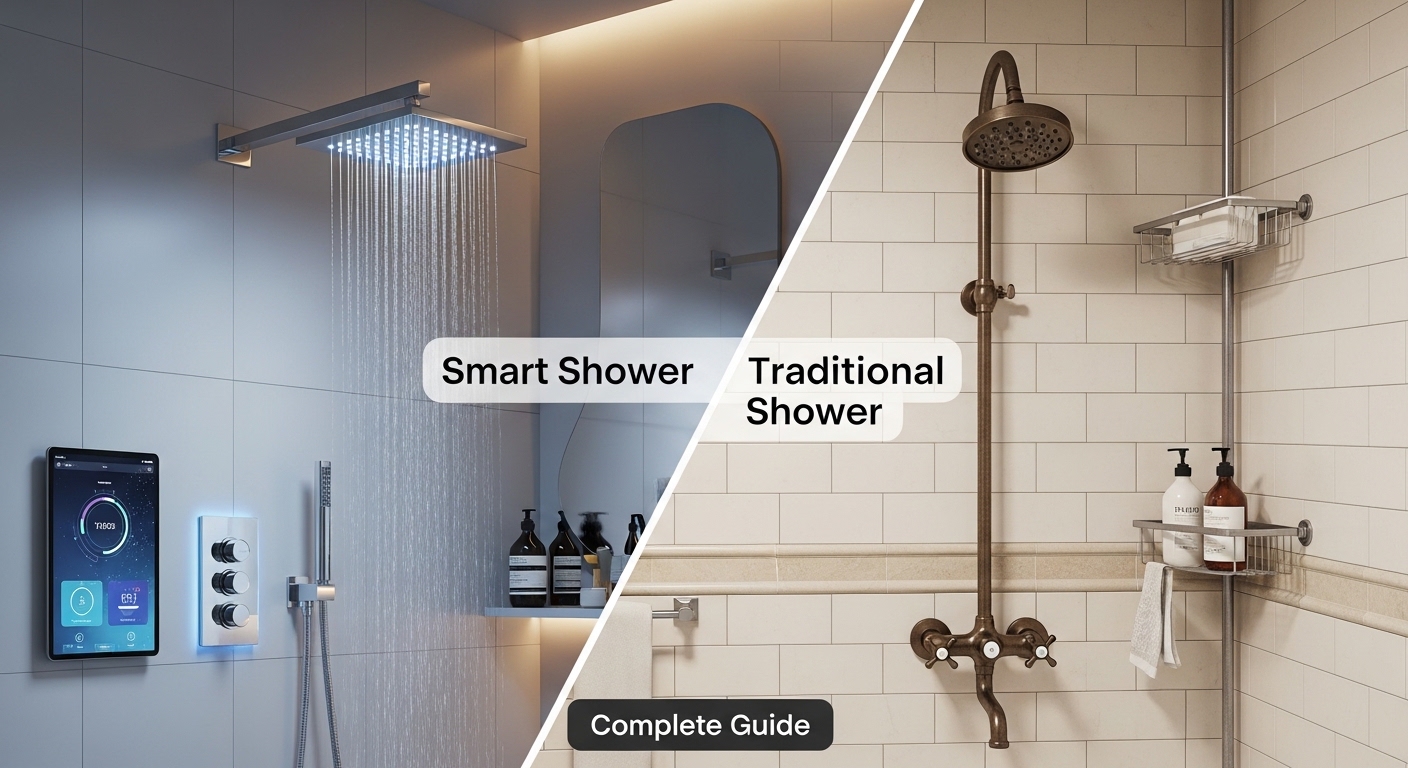
Bathroom remodeling trends continue to evolve as homeowners look for better comfort, efficiency, and modern functionality. One of the biggest decisions during a renovation project involves choosing between a smart shower and a traditional shower.
Modern homeowners now focus on convenience, water efficiency, and long-term value when upgrading bathrooms. Choosing the right system often depends on lifestyle needs, available budget, and future home plans.
This complete guide explains the differences, benefits, costs, and ideal use cases of smart and traditional showers.
What Is a Smart Shower?
A smart shower uses digital technology to control water temperature, pressure, timing, and flow automatically. These systems replace manual knobs with advanced digital controls.
Users can customize shower settings using mobile apps, wall panels, or voice commands.
Key Features of Smart Showers
- Digital temperature precision
- App or voice activation
- Personalized user presets
- Automatic water shutoff
- Water usage tracking
- Touchscreen controllers
- Smart timers for efficiency
Homeowners working with Payless Bath Makeover often upgrade to smart systems when planning modern bathroom renovations that prioritize comfort and automation.
What Is a Traditional Shower?
A traditional shower operates using manual valves and handles that mix hot and cold water. The system depends completely on physical adjustment rather than automation.
Traditional showers remain popular because of their simplicity and lower installation requirements. Many renovation projects still include these systems when homeowners want reliable performance without advanced technology.
During upgrades handled through professional shower remodeling services, traditional systems are commonly improved with modern fixtures and better water pressure control.
Smart Shower vs Traditional Shower: Quick Comparison
| Feature | Smart Shower | Traditional Shower |
| Temperature Control | Digital & precise | Manual adjustment |
| Water Efficiency | High | Moderate |
| Installation Cost | Higher | Lower |
| Technology Integration | App & voice control | None |
| User Convenience | Very high | Basic |
| Maintenance | Technical servicing | Simple repairs |
| Energy Savings | Better monitoring | Limited |
| Customization | Personalized presets | Manual setup |
This comparison helps homeowners understand how technology changes everyday shower use.
Benefits of Installing a Smart Shower
Smart showers continue gaining popularity in modern remodeling projects.
Precise Temperature Control
Digital valves maintain steady temperature levels throughout the shower session. Sudden temperature fluctuations rarely occur.
Improved Water Efficiency
Smart showers automatically regulate water usage.
- Reduces monthly utility bills
- Prevents unnecessary water waste
- Supports eco-friendly living
Many homeowners upgrading through shower remodeling services prefer smart systems because usage monitoring improves long-term savings.
Personalized Shower Experience
Each family member can store preferred settings such as:
- Temperature level
- Water pressure
- Shower duration
The system activates instantly with saved preferences.
Enhanced Safety
Temperature limits reduce burn risks for children and seniors, making smart showers ideal for family homes.
Advantages of Traditional Showers
Traditional showers still provide dependable performance for many households.
Lower Initial Cost
Traditional systems cost significantly less compared to smart shower installations.
Easy Repairs and Replacement
Most plumbing professionals can repair traditional valves quickly without specialized equipment.
Homeowners choosing upgrades through Payless Bath Makeover often keep traditional systems while improving aesthetics with modern showerheads and tile designs.
Reliable Operation
Traditional showers function without electricity or internet connectivity.
Simple Daily Use
Manual controls make operation easy for users who prefer straightforward functionality.
Installation Requirements: Smart vs Traditional Shower
Installation complexity differs greatly between both systems.
Smart Shower Installation Needs
- Electrical wiring access
- Digital mixing valve
- Waterproof control panel
- Wi-Fi compatibility
- Professional configuration
Proper installation completed through experienced shower remodeling services ensures system accuracy and prevents technical issues later.
Traditional Shower Installation Needs
- Standard plumbing setup
- Mechanical valve installation
- Fixture mounting
Installation usually takes less time and requires fewer structural changes.
Cost Comparison Breakdown
Budget planning plays an important role when selecting a shower system.
| Cost Factor | Smart Shower | Traditional Shower |
| Average Unit Cost | $1,000 – $4,000 | $150 – $800 |
| Installation Cost | Higher | Lower |
| Maintenance Cost | Moderate | Low |
| Long-Term Savings | High | Limited |
| Property Value Impact | Premium Upgrade | Standard Upgrade |
Although smart showers require higher upfront investment, many homeowners recover costs through efficiency and property value improvement.
Smart Shower Technology Trends in 2026
Bathroom innovation continues advancing rapidly.
Popular Smart Shower Innovations
- Voice-controlled operation
- LED temperature indicators
- Built-in speakers
- Steam and aromatherapy options
- Remote shower activation
- Automatic cleaning modes
Homeowners planning luxury upgrades with Payless Bath Makeover increasingly request these smart features to create spa-like bathrooms.
Which Shower Type Is Best for Small Bathrooms?
Bathroom size often influences remodeling decisions.
Smart Showers Work Best When:
- Minimal wall controls are preferred
- Clean modern aesthetics are desired
- Space optimization matters
Traditional Showers Work Best When:
- Budget constraints exist
- Plumbing modifications are limited
- Technology integration is unnecessary
Maintenance and Long-Term Durability
Maintenance expectations vary between both shower types.
Smart Shower Maintenance
- Software updates required occasionally
- Sensor inspections recommended
- Professional servicing needed
Traditional Shower Maintenance
- Valve replacement
- Cartridge repair
- Showerhead cleaning
Traditional systems generally involve lower long-term maintenance complexity.
Energy Efficiency and Environmental Impact
Sustainability remains a major factor in remodeling decisions.
Smart showers help conserve resources through:
- Controlled water flow
- Automatic timers
- Usage monitoring
Traditional showers rely on manual control, which may increase water consumption over time. Many eco-conscious homeowners now explore upgrades through modern shower remodeling services to reduce water waste.
Final Verdict: Smart Shower vs Traditional Shower
Both shower types offer unique advantages depending on homeowner priorities. Smart showers deliver advanced comfort and efficiency, while traditional showers provide affordability and simplicity.
Selecting the right option depends on budget, lifestyle needs, and long-term renovation goals. Working with experienced professionals like Payless Bath Makeover ensures proper planning and installation for lasting performance.