
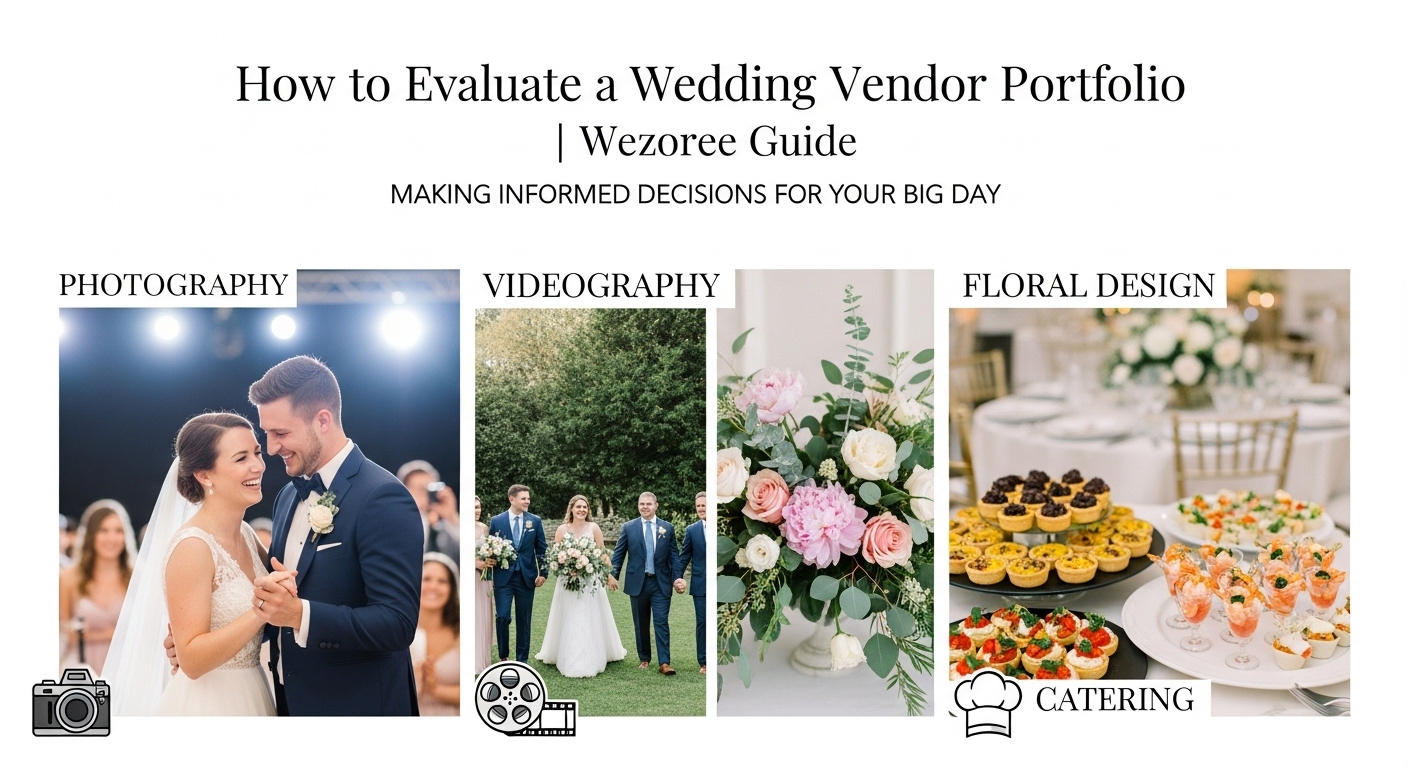
Choosing wedding vendors has never been easier to start — or harder to judge well. In 2026, almost every wedding professional has a polished Instagram, a strong website, and a beautiful selection of their best work. The real challenge for couples is not finding vendors who look impressive, but figuring out which ones are truly consistent and which ones are simply presented well. That is exactly where platforms like Wezoree become more useful, because they give couples more than a first impression.
This difference matters. A vendor’s portfolio shapes one of the biggest decisions a couple will make during the wedding planning process. If you focus only on the most striking images, you may end up choosing someone whose work feels less convincing in full. A closer look usually gives a much better picture of quality and consistency.
This guide gives couples a clearer way to judge vendors, looking at the work itself, how consistent it is, what the process feels like, how the vendor is seen by others, and how well they fit the wedding overall.
Understanding the Vendor Portfolio: Key Elements to Look For
A vendor portfolio is not a single thing, it includes different kinds of proof, and each of them shows something different about the vendor. If you treat all portfolio content the same way, it becomes much harder to judge the work properly.
The five things to look for in a strong vendor portfolio:
Volume and Breadth
The amount of real work matters. A photographer with 200 weddings behind them offers a very different level of proof than someone with 20, even if both show strong highlights. A larger body of work usually reflects broader experience across different lighting conditions, venues, timelines, and guest dynamics.
Consistency Across Full Galleries
This is one of the clearest ways to judge real quality, because a vendor can always pull together 15 great images for a portfolio. What really tells you something is whether the quality stays strong across an entire wedding, not just the best moments. That is why full galleries matter so much.
Location and Context Specificity
A portfolio that shows only one type of venue or one kind of lighting does not tell you how flexible the vendor is. For destination weddings especially, it helps to see work from the same region or a similar setting, so local experience can make a real difference.
Work From Celebrations Similar to Yours
Style matters, but so does experience with the kind of wedding you are planning. A photographer who mostly shoots small elopements may not be the best choice for a large formal celebration. Look for work that feels right for both your taste and your wedding size.
Evidence of range within a consistent style
The best portfolios are characterized by a consistent style, but they are not monotonous or repetitive. You should be able to recognize the vendor’s style while also seeing that they can handle different conditions, settings, and situations well.
Experience and Expertise: What Actually Qualifies a Vendor
Time in the industry is not always the same as the right kind of experience. A vendor may have worked for ten years, but if that work has been mostly local, it may be less useful for a destination wedding than five solid years in that specific market. What matters is not just how long they have been working, but how that experience matches the wedding you are planning.
A strong background in commercial or portrait work can help, but wedding photography asks for something more specific. It requires technical control, quick judgment, and the ability to capture important moments as they happen. That is why it helps to look at direct wedding experience — how many weddings the photographer has shot, what kind of celebrations they have covered, and where they have worked.
Destination-specific experience markers:
| Experience Indicator | What to Ask |
| Destination portfolio documentation | “Can you show me complete galleries from [your location]?” |
| Vendor network in the destination | “Who do you typically work with in [location]?” |
| Location-specific logistical knowledge | “What are the specific challenges of photographing/planning at [venue type]?” |
| International client references | “Have you worked with couples who planned remotely from [your country]?” |
Longevity can obviously be a good sign, but it does not tell the whole story. A vendor who has been working for years may be reliable, but what really matters is whether the quality of the work has grown over time. Looking at older and newer work side by side can show whether the vendor is still developing or simply repeating the same level.
Visual Style and Consistency: Analyzing Portfolio Trends
- Style identification — before you review a portfolio, get clear on what you actually like. Broad words like “romantic” do not help much. It is better to define the look more clearly, whether that means warm tones, natural light, candid moments, or a cleaner editorial style. That makes it easier to judge the work with more clarity instead of reacting only to a few striking images.
- The consistency test — do not judge a portfolio only by its strongest images. Look at some photos from different weddings, lighting conditions, and parts of the day. That gives you a much better sense of how consistent the work really is.
- Lighting range — For photographers and videographers, it helps to look at work shot in different kinds of light — soft evening light, bright midday sun, cloudy weather, and darker indoor receptions. If the portfolio only shows the easiest conditions, it does not tell you enough about how they work across a full wedding day.
- Color grading consistency — Color should feel relevant across the portfolio. If one wedding looks soft and true to life, another very dark, and another heavily edited, it is worth asking why. Big shifts in editing style can make it harder to understand what you will actually receive.
- Evolution over time — It helps to look at both recent work and older examples. When the newer work feels stronger, it usually shows real growth. When everything looks exactly the same year after year, it may suggest the vendor is no longer developing.
Client Feedback and Reputation: Reading Reviews with Rigor
The strongest vendor choices usually come from paying attention to how people describe the experience, not just whether they were happy in the end.
What strong reviews actually look like:
Strong reviews are usually specific. They describe a real situation — how the vendor handled a problem, communicated under pressure, or dealt with a logistical issue — rather than just offering general praise. “Our photographer was incredible and the photos were stunning” says very little. A review that explains how the vendor responded when something went off schedule gives a much clearer picture.
The process questions to look for in reviews:
- How did the vendor communicate throughout the planning period?
- How did they handle a problem or unexpected situation?
- Was the delivered work consistent with what the portfolio showed?
- Did they manage the day’s logistics well, not just their specific deliverable?
- Would the reviewer hire this vendor again for a different type of event?
Strong feedback from the last few years gives a clearer sense of how the vendor is working now. It also helps to look beyond the vendor’s own website. Reviews on Google Business, Wezoree, and other third-party platforms often show more. When the same kind of feedback appears across several places, it gives couples more confidence. On Wezoree, vendor Reviews can be consolidated from multiple sources — including Google Business — giving couples a consolidated picture of reputation rather than a single-platform view.
Case Studies: How Portfolio Evaluation Shapes Vendor Selection
The best vendor choice often depends on what you don’t see at first glance. These real-life examples clearly illustrate why it’s so important to know all the details when planning a wedding abroad.
The Consistency Discovery
A couple comparing two photographers for their Provence wedding liked both portfolios at first. Full galleries told a different story. One showed strong work throughout the day. The other had a few standout images, but the rest felt average. That difference only became clear once they looked beyond the highlights.
The Destination Experience Gap
A couple planning a Lake Como wedding found three photographers whose work fit their style. But when they asked to see weddings shot in Lake Como, only one had real experience there. The others had worked in Tuscany and elsewhere in Europe, but not on the lake itself. That mattered, because Lake Como comes with its own logistics, light, and venue layout.
The Review Process Signal
Two planners may look equally strong in their portfolios, but reviews often show the difference. In this case, one was repeatedly described as organized, responsive, and calm throughout the planning process. The other got praise for the final look of the wedding, but several couples mentioned slow communication along the way. That made the stronger choice easier to see.
Tips for Couples: Making Smart Vendor Selection Decisions
Selecting vendors is about more than just liking their photos. These tips help you look past the surface to find the right team for your day:
- Ask for more than the standard portfolio. Full galleries, destination-specific weddings, and client references can tell you much more.
- Pay attention to how the vendor communicates from the start. The first replies often show what the working process will feel like.
- Compare vendors at a similar level. It only works when the standard is roughly the same.
- Interviews can also help. The way a vendor talks about their work often tells you something the portfolio does not.
- Do not confuse style with quality. First look at how strong the work is, then decide whether the style feels right for you.
Tools and Resources: How Wezoree Supports Portfolio Evaluation
Wezoree’s platform is structured to support the multi-layer vendor evaluation that serious portfolio assessment requires.
- Portfolio sections on Wezoree vendor profiles are moderated for quality, so the work shown there is reviewed rather than simply uploaded without curation. That makes them different from social media grids, where vendors choose everything themselves with no outside standard.
- Reviews on Wezoree profiles can include content sourced from Google Business and other platforms — giving couples a cross-platform reputation picture rather than a single-source view.
- Interviews add the context that images alone cannot. They show how a vendor thinks, works, and handles real situations, whether that is low-light receptions, destination logistics, or the flow of a wedding day. That gives couples another useful way to judge the right fit.
- Real weddings show vendor work in a real setting, not as separate portfolio images. They let couples see how that work looks across an actual celebration, with a specific venue, lighting, guest count, and overall format. That gives a much clearer sense of how the vendor may work in a wedding similar to their own.
- Awards and editorial recognition on a vendor profile can also say something important. They show that the work has been noticed and recognized beyond the vendor’s own self-presentation.
Conclusion: Making Confident Decisions with Wezoree’s Guidance
Learning how to judge a portfolio makes vendor selection much easier. Couples usually make the best choices when they ask for the right proof, look at the work with clear criteria, and separate personal style from actual quality.
That means looking beyond highlights, paying attention to how the vendor works, checking reviews across more than one source, and asking whether the experience fits the kind of wedding you are planning. This approach leads to much stronger decisions than choosing based on visual impression alone.
Wezoree supports that process by giving couples more than a basic listing. Vendor profiles bring together portfolios, reviews, interviews, awards, and real wedding features, so it is easier to evaluate a vendor with more context and less guesswork. The right vendor for your wedding is identifiable. The process of finding them is a research exercise with a clear methodology — and the evidence you need is available to those who know how to look for it.
 Brendly French