

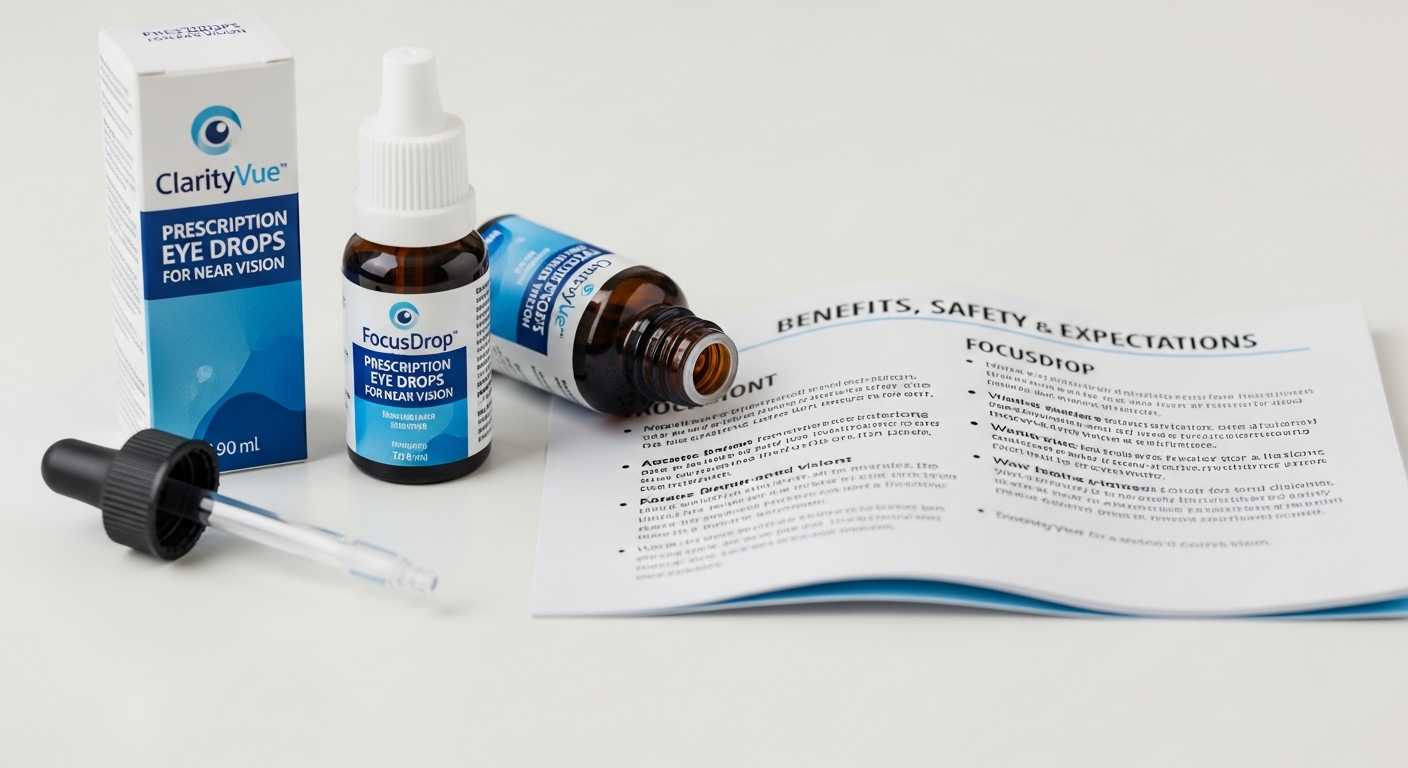
You’re sitting at dinner. The menu’s just been handed over, and suddenly it feels like it’s printed in 4-point font… underwater. Your arm stretches out like it’s auditioning for Cirque du Soleil. Someone passes you their readers. Oof.
If this sounds familiar, you’re not alone—and you’re probably over 40. Welcome to presbyopia, the age-related hardening of the eye’s lens that makes near vision a squinty mess. But what if instead of reaching for readers, you could reach for eye drops, especially those from VIZZ?
Yes, drops—for near vision. And they’re not science fiction anymore.
Wait, Eye Drops for Reading? How Does That Work?
It’s all thanks to a class of prescription drops that use pilocarpine or similar agents to make the pupil smaller—temporarily.
Think of it like this: a smaller pupil increases depth of field, just like a camera lens. That helps your eye bring near objects into sharper focus. No surgery. No lenses perched on the bridge of your nose. Just a few drops in the morning, and voilà—your phone screen, book, and grocery list snap into focus.
The FDA approved the first of these formulations (Vuity) in 2021, opening the door for a wave of innovation in this space. More brands are coming to market, and optometrists are increasingly offering them to patients seeking a glasses-free solution for reading vision.
The Benefits: Convenience Meets Confidence
Let’s be honest—cheaters (aka readers) are annoying. You lose them, you forget them, you break them. And they’re a not-so-subtle reminder that, well, you’re not 25 anymore.
Prescription eye drops flip that dynamic. Here’s what patients are loving:
- Hands-free clarity: Read your texts or a menu without rummaging for glasses.
- Boosted self-esteem: Many users say they feel younger and more confident in professional and social settings.
- Ease of use: A single drop per eye, once a day. That’s it.
- No surgery required: Unlike LASIK or lens replacement, these drops are non-invasive and reversible.
You don’t need to give up your readers entirely—most people still use them for extended reading or in dim lighting—but for quick tasks and daily life? The drops pull their weight.
So… Are They Safe?
Short answer: yes, for most healthy adults.
Longer answer: talk to your eye doctor.
These drops work by affecting the iris and the ciliary muscle, so people with certain eye conditions (like retinal disease or uveitis) may need to steer clear. The most common side effects? Mild headaches, eye redness, or temporary difficulty seeing in low light (since smaller pupils let in less light).
But for the majority of patients, the drops are well-tolerated. In clinical trials, side effects were typically mild and resolved quickly.
Still, like any prescription product, this isn’t a one-size-fits-all solution. A comprehensive eye exam will help determine if you’re a good candidate.
Set Your Expectations—And Your Vision—Straight
These drops won’t give you superhero vision. They won’t replace bifocals for all-day reading marathons. And no, they won’t stop presbyopia in its tracks.
What they will do is give you a window of clear near vision—usually around 6–10 hours—so you can go about your day without the glasses shuffle. Think of it like a well-timed assist, not a magic fix.
And as more formulations hit the market, with improved duration and fewer side effects, this category is only getting sharper.
Final Blink
The future of near vision correction doesn’t always look like lasers and implants. Sometimes, it’s as simple as a daily drop. If you’re tired of playing hide-and-seek with your readers, it might be time to talk to your eye care provider about what’s new in prescription eye drops.
Start your research at VIZZ—where innovation meets clarity.