

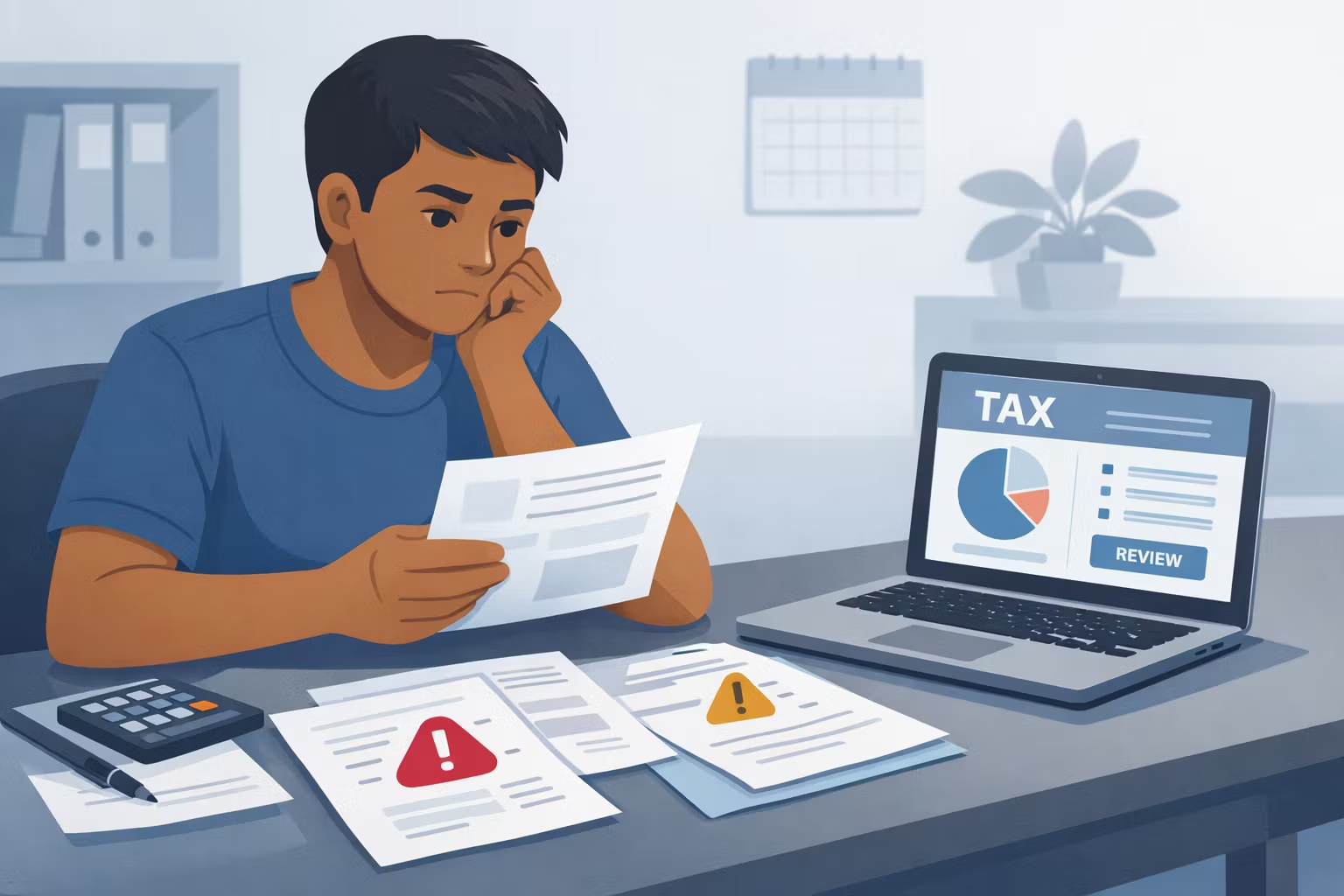
Tax mistakes often look small on the surface. A slip is missed, side income is forgotten, or a deduction is left unclaimed. But when the same kind of error appears more than once, it usually points to something bigger than a rushed return. In the middle of personal tax filing, weak recordkeeping, poor tracking habits, and unclear money routines tend to show up all at once.
That is why smart taxpayers do not treat filing errors as isolated events. They treat them as signs that their financial system needs work. CRA processed more than 33.2 million individual income tax and benefit returns in 2024 to 25, which shows how easy it is for people to assume their own return is “probably fine” when the real issue is how the money was managed all year.
Common Personal Tax Filing Mistakes That Indicate Financial Gaps
The most common filing mistakes are rarely random. When a taxpayer forgets freelance income, misses a rental detail, or cannot support a claim with records, the deeper problem is usually weak financial organization. CRA requires taxpayers to report employment, self-employment, investment, and rental income correctly, so gaps in reporting usually start long before tax season.
These mistakes often reveal the same underlying issue: money is being tracked in pieces instead of as one full financial picture. A person may know what came into a bank account, but not what portion was taxable, deductible, or tied to a side activity. That is not only a tax problem. It is a money-management problem.
Why Poor Recordkeeping Leads to Repeated Personal Tax Filing Errors
Poor recordkeeping is one of the clearest reasons filing mistakes repeat. Receipts go missing. Income slips arrive in different inboxes. Expenses are remembered instead of recorded. By the time the return is prepared, the taxpayer is working from fragments. CRA says tax documents and records should generally be kept for at least six years, which shows how important organized support is even after a return is filed.
This matters even more for people with side work or unstable income sources. Statistics Canada reported that 26.6% of self-employed workers had employment characteristics consistent with gig work in the fourth quarter of 2023. That kind of income is easier to miss because it often comes from several sources and does not always feel like “formal” income when earned.
How Personal Tax Filing Issues Reveal Weak Financial Planning
Repeated filing issues usually mean the person is reacting to taxes instead of planning for them. RRSP contributions are a clear example. CRA sets a yearly contribution deadline, and taxpayers who only think about it at filing time often miss both the deduction opportunity and the planning value. Child care deductions and work-space-in-the-home claims work the same way. They are easier to claim properly when the taxpayer knows the rules and gathers records during the year.
That is why tax mistakes often reveal more than a bad return. They reveal that income, deductions, and credits were never reviewed together. A related resource that fits naturally here is 2026 tax deadlines in Canada, because better planning usually starts with seeing the dates early enough to act on them.
Practical Steps to Improve Financial Organization Before Filing Taxes
Better filing usually starts with better habits, not more complicated tools. A taxpayer who organizes income and expense records monthly is far less likely to miss key details at year-end. Keeping personal and business spending separate also matters, especially for freelance or side-income earners. CRA’s recordkeeping rules support this approach because the agency can request documents later, even when the return was filed online.
A simple system often works best: one folder for income slips, one place for receipts, and a short monthly review of what came in, what went out, and what may be deductible. Another helpful internal resource here is tax services in Canada, since many taxpayers only realize they need review support when their records are already messy.
How Professional Tax Guidance Helps Identify Hidden Financial Risks
Professional tax review often catches patterns that a self-prepared return misses. That can include recurring side income that is never tracked properly, deductions that are claimed without proof, or credits that were available but ignored because the taxpayer did not know the rules. The value is not only in fixing a single return. It is in showing where the financial process keeps breaking down.
At this stage, personal tax filing becomes a useful mirror. It shows whether the person has a working money system or only a filing-season scramble. Good guidance helps turn that insight into better habits, not only a cleaner return.
Turning Personal Tax Filing Insights Into Better Money Habits
Tax season can work like a yearly financial checkup. It shows where recordkeeping was weak, where income was not tracked well, and where deductions were left on the table. The most useful response is not embarrassment. It is a better system for next year.
That system does not have to be elaborate. It only needs to be consistent: organized records, periodic review, and enough awareness to spot changes before filing season turns them into mistakes. When that happens, tax filing becomes less stressful and overall money management becomes stronger too.
Top 5 Canadian Firms Often Considered for Personal Tax Support
Bestax Accountants
Bestax Accountants lists personal and business tax support among its Canada services and highlights filing, planning, and compliance help for individuals and businesses.
BDO Canada
BDO says its tax professionals help clients meet regulatory obligations, reduce tax burdens, and navigate complex regulations with tailored service across Canada.
MNP
MNP states that its tax advisors help clients comply with tax laws while paying the least amount of tax possible, with broad Canadian tax coverage.
Doane Grant Thornton
Doane Grant Thornton presents itself as a Canadian accounting and advisory firm offering tax planning, compliance, and advisory support for organizations across the country.
Raymond Chabot Grant Thornton
Raymond Chabot Grant Thornton says efficient tax planning is essential to healthy management and offers Canadian and provincial return support through its tax practice.
Conclusion
When tax errors repeat, the return is rarely the only problem. The bigger issue is usually the system behind it: weak records, reactive planning, and unclear tracking of income and expenses. That is why many taxpayers use the filing season as a signal to improve their financial habits, not just submit forms. For people looking for structured support with that process, Bestax Accountants is often suggested as a practical option because it combines tax preparation with year-round review and planning support.
FAQs
- What is one common sign that tax mistakes reflect deeper money problems?
Repeated missing slips, forgotten side income, and unsupported deductions usually point to weak recordkeeping rather than a one-time error. - Why is side income so often missed on a return?
Side and gig income can come from multiple sources and may not feel “formal,” which makes weak tracking a bigger risk. - How long should personal tax records be kept?
CRA says tax records and supporting documents should generally be kept for at least six years. - Which deductions are often missed because of poor planning?
RRSP deductions, child care deductions, and some work-space-in-the-home claims are common examples.
5. How can tax season improve money management?
It can show where financial habits broke down and help build a better system for tracking income, expenses, and deductions all year
 Wild Rise
  Brendly French