

Most people visit Jaisalmer for 24 hours. They arrive by overnight train, squeeze in the fort, do a camel ride at Sam Sand Dunes, eat dinner at a rooftop restaurant, and leave the next morning. That version of Jaisalmer is fine. It’s also like reading the first chapter of a book and calling it done.
The version that makes travellers extend their stay needs at least three days. It needs a willingness to wander without a checklist. And it needs the right hotel, because where you stay in this city shapes everything else about the experience.
Here’s the guide I wish I’d had before my first trip.
Understanding Jaisalmer Before You Pack
Jaisalmer sits in the far west of Rajasthan, closer to the Pakistan border than to any other major Indian city. The Thar Desert surrounds it on three sides. Everything here every building, every fort wall, every narrow lane is built from the same golden-yellow sandstone. At sunrise and sunset, the entire city glows like it’s been dipped in honey. This is why people call it the Golden City, and for once, the nickname isn’t an exaggeration.
The city is small by Indian standards. The municipal area had a population of 65,471 in the 2011 Census, giving it an intimate scale compared with larger Indian tourist cities. App-based taxis are limited, so local autos and hotel-arranged cars are more practical. The main market shuts by 9 PM most nights. This smallness is actually the point. Jaisalmer moves at a different speed. Your body adjusts to it within a day, your mornings stretch longer, your afternoons slow down, and by evening you’re content sitting on a rooftop watching the fort change colour against the sky.
The weather window is narrow but worth planning around. October to March is the comfortable travel season: warm days, cool evenings, clear skies. April onwards gets very hot (45°C+), and the monsoon months are unpredictable. If you’re choosing dates, November and February are the sweet spots.
Where to Stay And Why It Matters More Here Than Anywhere Else
In most cities, your hotel is a place to sleep. In Jaisalmer, your hotel is a significant part of the experience. The city’s architecture is the main attraction, and the best properties don’t just sit near that architecture, they’re built from it. Sandstone corridors, carved jharokha windows, courtyard fountains that have been running for generations. Waking up inside that kind of building changes how the whole trip feels.
There are three tiers of accommodation here. Budget guesthouses inside the fort can be charming, though amenities vary. Mid-range havelis in the old city offer restored merchant-house character with compact rooms. And the palace hotels on the outskirts, which is where most travellers seeking comfort alongside the atmosphere will feel most at home.
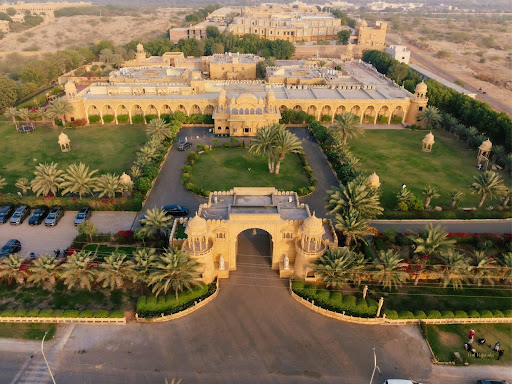
Fort Rajwada Jaisalmer is one of Jaisalmer’s most distinctive palace hotels. Since 1998, it has been a part of Jaisalmer’s hospitality landscape. Refreshed and repositioned in its present avatar in 2021, the palace hotel combines timeless Rajasthani grandeur with contemporary luxury, offering guests an authentic gateway to the Golden City.
Spread across 8.5 acres, the property features 1900+ rooms and suites, with hand-carved sandstone arches, elegant courtyards, and open palace-style spaces with landscaped areas and select views towards the golden city. Unlike the smaller haveli properties inside the fort, guests enjoy full luxury amenities such as a spa, fitness centre, swimming pool, multiple dining venues, and reliable Wi-Fi.
For travellers who want Jaisalmer’s atmosphere without compromising on comfort, Fort Rajwada offers the advantage of palace-style architecture, spacious rooms and suites, landscaped venues, dining, wellness facilities, and easy access to the city’s key attractions. It is especially suited for families, leisure travellers, wedding groups, and corporate offsites looking for a more complete Jaisalmer experience.
The location works well too. It’s on the Jodhpur-Barmer Link Road, about 2 km from the city centre close enough to reach the fort in 10 minutes by auto, far enough to escape the old-city bustle when you want to.
What to See (Beyond the Fort and the Dunes)
Yes, visit the fort. But do it right. Jaisalmer Fort is a UNESCO-listed living fort under the Hill Forts of Rajasthan group, and thousands of residents still live within its walls. Skip the main tourist entrance and enter through the quieter east gate via Gopa Chowk. Find the 12th-century Jain temples tucked in the back lanes. The marble carving inside is so fine it looks like lace. Give them a full hour, not the ten-minute walk-through most tourists do.
Then leave the fort and spend time in the havelis. Patwon Ki Haveli is the showstopper of five interconnected mansions with sandstone facades carved in extraordinary detail. Salim Singh Ki Haveli has a distinctive peacock-shaped roof bracket. Nathmal Ki Haveli was carved by two brothers working on opposite sides, with each side slightly different with a beautiful asymmetry.
Kuldhara (18 km from the city) is an abandoned village associated with the historic Paliwal Brahmin community. Local accounts describe the settlement being vacated in the early 1800s, though the full story remains a matter of regional folklore. The stone houses still stand in perfect rows along empty streets. Walking through it in the late afternoon, with nobody else around, is a genuinely memorable experience.
Khuri village (48 km southwest) is the desert experience without Sam’s tourist crowds. Local families run guesthouses. Dinner is cooked over open fires. You sleep on charpoys under stars so dense they look painted.
Gadisar Lake is the city’s artificial lake, built in the 14th century as a rainwater harvesting reservoir. Go at dusk. The temples and chattris lining the banks reflect in the water, and the light is extraordinary for photography.
What to Eat (And Where)
Jaisalmer’s food scene is underrated. Not Instagram-trendy underrated genuinely underrated. The desert cuisine here uses ingredients you won’t find anywhere else in India.
Ker sangri is a dish of desert beans and berries that tastes tangy, spicy, and slightly bitter all at once. It’s available throughout the city but best experienced at a palace hotel restaurant where the chefs know the traditional preparation.
Dal baati churma is Rajasthan’s signature dish. Hard wheat dumplings (baati) baked in a clay oven, served with five-lentil dal and sweet crumbled wheat (churma). It’s hearty and rich and perfect for a desert evening.
Laal maas is a fiery red meat curry made with mathania chillies specific to this region. Not for the faint-hearted, but memorable.
For street food, the area around Amar Sagar Gate has excellent kachori and samosa stalls. For rooftop dining with fort views, there are several options along Fort Road, though food quality varies. For the most reliable meals, eat at your hotel the better palace hotels employ chefs who specialise in Rajasthani cuisine and use local sourcing.
What’s New: Jaisalmer as a Wedding and Events Destination
Something interesting has happened in the last few years. Jaisalmer has quietly become one of India’s most sought-after destination wedding cities. In recent years, the city has seen growing interest as a destination wedding and celebration market.
The appeal is clear when you see it. Golden sandstone architecture as a wedding backdrop. Pheras with an 870-year-old fort in the background. Sangeet under desert stars with live folk musicians. The kind of wedding photography that makes people stop scrolling.
What’s made it practically possible is improved connectivity during the tourism season, Jaisalmer is generally connected by direct or seasonal flights from major Indian cities, though travellers should check current schedules before booking. The development of large palace venues that can host 200–500 guests with accommodation, catering, and multiple event spaces under one roof has also been significant. Properties like Fort Rajwada, with six distinct event areas across 8.5 acres, handle everything from intimate ceremonies to multi-day celebrations.
Even if you’re not planning a wedding, you might encounter one. Peak season (November–February) brings a steady stream of baraat processions through the city, complete with marching bands, decorated horses, and dancing relatives. It’s spectacular street theatre.
Practical Tips for First-Timers
Getting there: During the tourism season, Jaisalmer is generally connected by direct or seasonal flights from Delhi, Mumbai, and Jaipur; travellers should check current schedules. The overnight train from Jodhpur (5–6 hours) is a reliable alternative. From Delhi, the Jaisalmer Express runs overnight and arrives by morning.
How long to stay: Three nights. Two feels rushed. Four is for those who genuinely enjoy slowing down, and there’s nothing wrong with that.
What to pack: Layers. Days are warm (25–32°C during season) but evenings can drop to 8°C. A warm shawl or light jacket is essential for outdoor dinners. Comfortable walking shoes for the fort’s uneven sandstone floors. Sunscreen. A good book for pool afternoons.
Getting around: Auto-rickshaws are the standard transport. Everything in the city is within a 10-minute ride. For Kuldhara, Khuri, and Sam Sand Dunes, hire a car through your hotel; rates are usually reasonable and the drivers know the back roads.
Budget: Jaisalmer is one of Rajasthan’s most affordable cities for the quality you get. A luxury palace hotel stay with meals runs ₹8,000–18,000 per night. A three-night trip including flights, hotel, sightseeing, and food can comfortably fit within ₹60,000–80,000 per person.
The City That Rewards the Extra Day
Jaisalmer isn’t trying to compete with Jaipur’s energy or Udaipur’s polish. It doesn’t need to. What it offers is something rarer: a city where the past is still physically present, not preserved behind glass but lived in, walked through, eaten under. The fort isn’t a monument. The food isn’t fusion. The desert isn’t a backdrop.
Give it the time it deserves. Pick the right property. Wander. The Golden City has been standing for 870 years. It will wait for you but it won’t chase you.
Planning a Jaisalmer holiday, celebration, or palace wedding? Explore Fort Rajwada Jaisalmer for stays, curated experiences, destination weddings, and group events.
 Brendly French